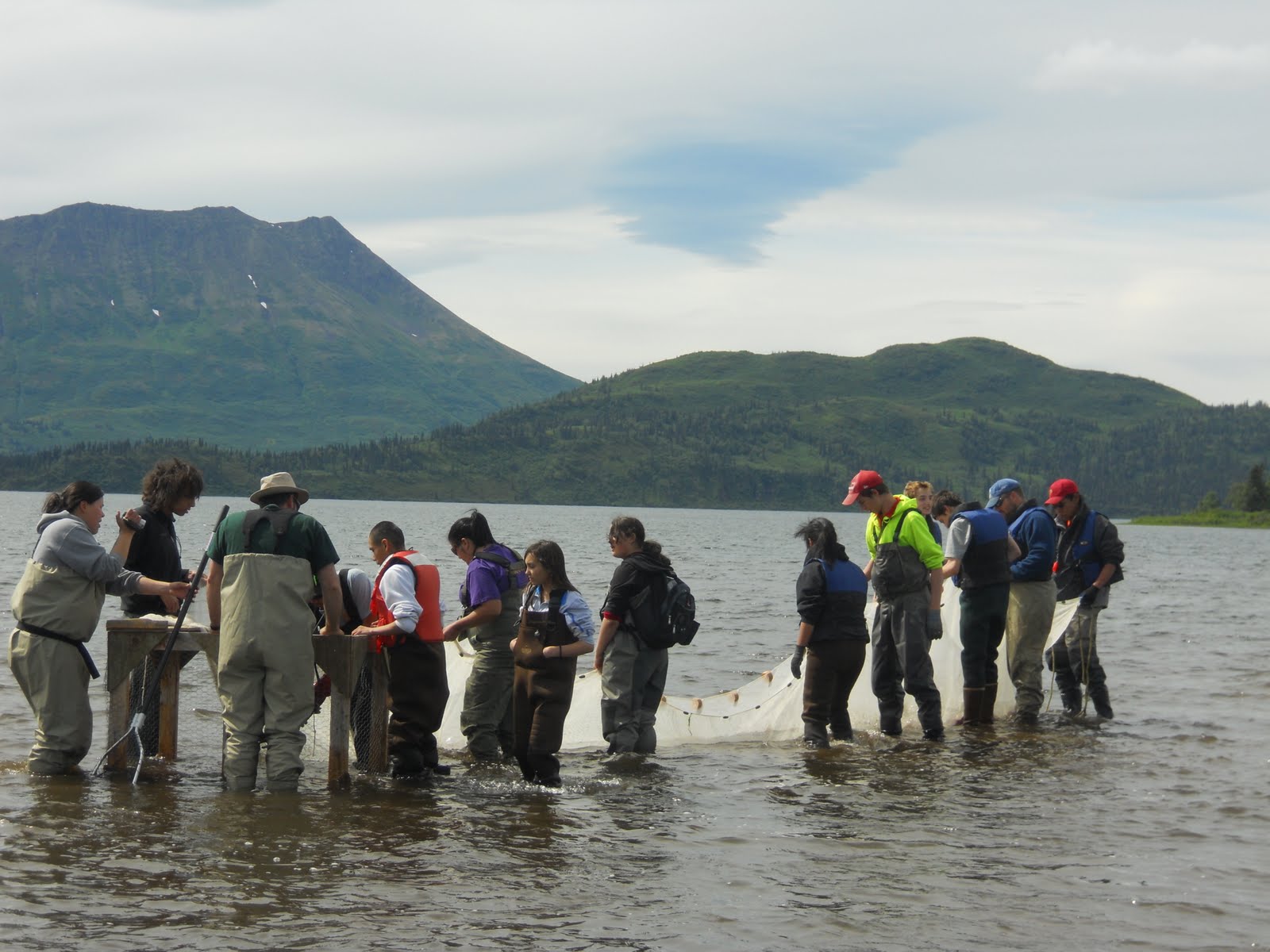
This camp was an awesome opportunity for the students to learn more about stream and salmon ecology, interact with new people, and explore an area that most of them had never been to before. We would like to say thanks to the counselors, Dr. Todd, our visitors from the Bristol Bay Campus, and Shawn from NOAA who all played a part in this awesome camp!
Wednesday, August 10, 2011
Bristol Bay Salmon Camp July 28th - August 2nd
This camp was an awesome opportunity for the students to learn more about stream and salmon ecology, interact with new people, and explore an area that most of them had never been to before. We would like to say thanks to the counselors, Dr. Todd, our visitors from the Bristol Bay Campus, and Shawn from NOAA who all played a part in this awesome camp!
Monday, July 18, 2011
Fish Dissections!
Last week I had the opportunity to volunteer with the Middle School Academy held through ANSEP at the UAA campus. I joined the students on a day they were taking classes in genetics, ecology, hydrology, and dissection. I volunteered in the dissection lab and led three small groups through their exploration of a rainbow trout. Each kid had their own fish and we worked together to identify all the external and internal body parts of the fish. Some of the kids were really into the dissections, while others were not. However, they all participated and learned a lot. After the clean up, the students completed their dissection worksheets and were given the chance to check out some other previously dissected creatures.
To learn more about what ANSEP is all about and all the opportunities they offer check out their website!
Wednesday, June 22, 2011
2011 ADF&G Youth Days June 13 - 15th
The Alaska Department of Fish and Game held an outdoor youth days camp last week and the week before in Anchorage. These two camps lasted three days each and were open for kids ages 10-14. The camp is design to promote awareness and respect of Alaska’s natural resources and outdoor activities. The three days were filled with fishing, hunter safety, survival skills, map and compass education, wildlife ID and tracking, boating safety, ecology, and lots more.
I helped out during the second week to teach the kids about animal tracks, scat, watershed ecology, and a little fishing too. Thirty kids were divided into three groups and spent about an hour and a half in each area. On Monday we met at the Rabbit Creek shooting range and I worked with Elizabeth Manning. The kids first made plaster replicas of animal tracks. We also had a game that helped the kids learn how to identify scat and a relay to see how well they knew their tracks. We also had the kids break up into small groups and conduct a scavenger hunt while they made their way down to a crime scene. Earlier in the morning Elizabeth set up an area with feathers, tracks, and fake blood so that the kids could figure out what happened. The small groups were let in one at a time to scan the area and then were given a wanted list to help them figure out who died and who did it. After everyone had a look they all got to share what they thought had happened and they all had a variety of ideas. It was a lot of fun!
I joined the camp again on Wednesday when the kids were learning about identifying fish, looking at macroinvertebrates, learning salmon anatomy and life cycle, and learning how to fish. The longest activities were fly fishing and spin casting. The kids learned knots, how to cast, and once they were all setup with hooks got to go out and do some fishing at the lake. Although no fish were caught the kids had a blast and could have spent all day out there with their poles.
This camp was a great way to get the kids outside while learning about different aspects of science. Plus the kids all walked away with loads of information and even got a fishing pole so they continue to practice their safe fishing skills.
Thursday, June 16, 2011
2011 Making Waves Summer Camp!

A few days into the camp I joined in on the fun and worked with three wonderful counselors including one of the AMSFCC funded interns, Taylor. The second week included activities that ranged from combing beaches to cleaning whale bones. The kids caught fish for the center using a beach seine and enjoyed scooping up the fish, releasing the ones we couldn’t keep, and identifying them all. They learned about Humpbacks and scientific communication. They also had their own mini Ocean Science Bowl competition and even got to explore some little caves. They also got to play some games including a version of Marco polo to explore how echolocation works and a hatchery game that included water balloons.

Campers spent their last few days at camp participating in a few cultural activities and cleaning whale bones. The students were lucky enough to help out Dr. Shannon Atkinson in the process of starting to clean the bones of a juvenile male killer whale that washed up on a nearby beach in the spring. The kids worked on getting the ribs, skull, and vertebrae cleaned and did an amazing job even though they didn’t enjoy the smell. Work on the skeleton will continue during the next few months and once completed, the rearticulated skeleton will be on exhibit at the Sitka Sound Science Center.
The camp was loads of fun and got the attention of the whole community! You can find tons of pictures from the camp in our photos and on the Sitka Sound Science Center’s Facebook page. Also listen to a cool broadcast about the orca skeleton that was aired on Raven Radio.
Before and after of one set of vertebrae that were cleaned.Thursday, May 19, 2011
Dillingham Sea Week!
About 40 kids participated and each day was filled with interactive activities including a number of games and crafts. Crafts included making whale mobiles, a number of activity books, and even helping decorate a poster for the celebration of learning that took place on Wednesday. The kids also saw a presentation about sea birds, learned about the salmon life cycle, played a food web game, and got to play with a bunch of little critters. Microscopes were setup one day for the kids to look at plankton and we finished the week off with isopod races.

